Comparisons
7 Best DataFast Alternatives for Revenue-First Analytics in 2026
Compare seven credible alternatives by payment attribution, privacy, setup and the decisions your team actually needs to make.

Premely team
On this page
The short answer: choose the missing answer
The best DataFast alternative depends on why you are considering a move. Start with Premely when your central question is how acquisition, conversions and connected payments relate. Choose Plausible for a compact, cookieless website report with event-based revenue. Look at PostHog when product behaviour and engineering-led investigation matter more than a small dashboard. Consider Matomo or Umami when hosting control is a requirement.
DataFast itself remains a credible choice for a founder who wants payment attribution and visitor context together. Its current documentation includes goals, funnels, journeys, payment connections and business context. Replacing it simply because an old comparison calls it a visitor counter would be a poor decision.
Start by writing the sentence your current setup cannot finish: “We need to know which campaign produced new customers after refunds,” for example. That is more useful than asking which vendor has the longest feature list. You can inspect Premely’s revenue approach alongside the options below.
How we put this comparison together
We build Premely, so we have a perspective. This comparison uses current official documentation, not a paid ranking or an independently benchmarked score. Provider marks identify the products and do not imply endorsement. Features, plans and integration availability can change; check the linked sources before purchasing.
Choose your measurement model first
Where did people come from?
Start with acquisition analytics.
Sources · pages · campaign eventsWhat happened inside the product?
Start with product analytics.
Activation · adoption · retentionWhich activity became revenue?
Connect acquisition and payments.
Customer linkage · refunds · revenueRevenue is not one capability. Recording a purchase value, connecting a payment provider, identifying a returning customer and allocating a payment to a campaign are separate jobs. A tool can perform one without doing the others. An event with a value of £49 does not automatically establish who paid, whether that was a renewal, or which earlier session deserves credit.
Privacy also changes the answer. A cookieless aggregate report and a longer-lived identified journey solve different problems. DataFast documents an optional cookieless mode, but explains that this changes visitor continuity and journey functionality. Compare the mode you will actually deploy, not a feature from one mode with a privacy promise from another. See its tracking-mode explanation.
Which analytics setup fits your team?
Choose your goal and what matters most. Your shortlist updates as you make a selection.
Refine your requirementsManaged hosting · Cookieless measurement · Purchase events
These settings also shape the shortlist. Change them to match your team and payment setup.
Select a priority or change an answer to see your shortlist.
How this recommendation works
Premely does not automatically win. Each selected priority adds three points when it matches our editorial fit assessment. An unscored priority does not mean a product lacks that feature. Hosting is a hard filter; this shortlist compares hosted editions of Plausible and PostHog, not community editions. Product depth adds six points for a product question; suitable acquisition scope and simpler setup add two each. A matching payment connection and privacy model add four each. Ties remain ties, with Premely shown first when its score is equal. These weights express a decision aid, not measured product quality. Plan gates and implementation effort still need checking.
Candidate set: Premely, Plausible, PostHog, Fathom, Matomo, Umami, Google Analytics 4. Sources were reviewed on 4 September 2026 and are linked in this article.
| Requirement | What to inspect | The decision it changes |
|---|---|---|
| Traffic and campaigns | Sources, landing pages, UTMs and the treatment of direct traffic | Can a marketer explain where demand arrived? |
| Revenue attribution | Verified payment evidence, matching keys and the attribution rule | Is this attributed revenue or just a total? |
| Goals and funnels | Event definitions, ordering, time limits and plan gates | Can you locate a genuine conversion drop-off? |
| Journeys and customer context | Session paths versus durable person or account identity | Can you answer a same-day or a month-long question? |
| Payments and integrations | Your exact provider, currency and checkout implementation | Will your real stack connect, including refunds? |
| Privacy and cookies | The deployed mode, data fields and identification lifetime | Does the design match your privacy requirements? |
| Events, alerts and anomaly context | A changed number versus an evidenced explanation | Will someone know what needs investigation? |
| Pricing and retention | Billable event definition, feature tier, history and exports | What does the usable setup cost over a year? |
| Setup and maintenance | Tracker, server events, identity mapping and ownership | Who fixes an attribution gap next month? |
This is deliberately not a wall of checkmarks. “Journeys” might mean anonymous paths within a short window or identified histories across visits. “Revenue” might mean browser events or a payment ledger. Ask each shortlisted vendor to demonstrate the same small, real workflow.
Seven DataFast alternatives worth evaluating
These are seven different fits, not an overall ranking. Each has a reason to be here and a reason you might rule it out. Commercial models are described instead of quoting an entry price that excludes your required feature tier.
Premely
RecommendedBest forReading acquisition, conversions and connected revenue in one focused workspace.
Features, pricing and trade-offs
Consider another option ifYou need a warehouse, experimental platform, or guaranteed cross-day anonymous identity.
Connected payment context; visitor linkage requires matching attribution evidence.
- Commercial model
- Event-volume subscription; check the current tier.
- Measurement model
- Cookieless measurement. Anonymous funnel windows are bounded; not a persistent customer identity system.
- Setup
- Tracker, outcome definitions and verified payment connection.
- Retention
- Check the selected plan and deletion controls.
Official sourcesProduct and revenue · Plans

Plausible
Best forA compact, cookieless website view with event-based revenue on Business.
Features, pricing and trade-offs
Consider another option ifYour decision depends on persistent, identified customer histories across a long sales cycle.
Business supports revenue-valued events, source/campaign/page attribution, funnels and journeys.
- Commercial model
- Pageviews plus custom events, with feature-based plans.
- Measurement model
- No cookies or persistent visitor identifiers.
- Setup
- Install the snippet; instrument the outcomes and revenue values you need.
- Retention
- Plan-dependent; cancellation has separate deletion terms.

PostHog
Best forEngineering-led teams investigating product behaviour alongside acquisition and Stripe data.
Features, pricing and trade-offs
Consider another option ifYou only need a small website report and do not want to own an event and identity model.
Stripe data and revenue properties work across insights, SQL and managed views; no dedicated revenue dashboard.
- Commercial model
- Per-product usage billing with free allowances.
- Measurement model
- Review persistence and consent settings for the SDK features you enable.
- Setup
- SDK plus event design; link revenue data to the correct people or groups.
- Retention
- Current pricing distinguishes one-year free and seven-year paid retention; verify each data type.
Official sourcesWeb analytics · Revenue model · Stripe source · Pricing

Fathom
Best forTeams who want a small, readable website dashboard and event conversions.
Features, pricing and trade-offs
Consider another option ifYour main requirement is a payment-led customer-history or product-experimentation system.
Custom events can carry revenue values and currencies.
- Commercial model
- Traffic-based subscription.
- Measurement model
- Cookieless, aggregated website reporting.
- Setup
- Install its script and configure meaningful events.
- Retention
- Advertises ongoing dashboard history while you remain a customer.
Official sourcesFeatures and retention · Pricing

Matomo
Best forOrganisations that want hosting control and configurable website analytics.
Features, pricing and trade-offs
Consider another option ifYou do not want to maintain infrastructure or evaluate plugin and hosting differences.
Ecommerce and attribution reporting; funnels are included in Cloud or available as an on-premise plugin.
- Commercial model
- Cloud subscription or self-hosted core with optional paid capabilities.
- Measurement model
- Configuration determines the tracking and consent model.
- Setup
- Choose hosting, then configure tracking and the reports you need.
- Retention
- Review the chosen deployment's raw-data and report retention settings.
Official sourcesAttribution · Funnels · Pricing

Umami
Best forTeams wanting open-source web analytics with a self-hosting option.
Features, pricing and trade-offs
Consider another option ifYou need an assumed, no-configuration payment-provider reconciliation service.
Revenue-valued events, plus first-click and last-click attribution reports.
- Commercial model
- Self-hosting or managed cloud; check the cloud allowance.
- Measurement model
- Cookieless by design; review optional identification and the data you send.
- Setup
- Deploy or use cloud, add the tracker, then send events with revenue and currency.
- Retention
- Depends on your hosting and plan; own the policy when self-hosting.
Official sourcesProduct and hosting · Revenue · Attribution

Google Analytics 4
Best forTeams invested in Google's advertising and event-based reporting ecosystem.
Features, pricing and trade-offs
Consider another option ifYou want payment-led reports without owning ecommerce instrumentation and attribution settings.
Ecommerce purchase/refund events and configurable attribution reporting.
- Commercial model
- Standard and enterprise editions; implementation and warehouse costs are separate.
- Measurement model
- Review consent, identifiers and advertising features in your actual implementation.
- Setup
- Configure events, ecommerce values, identity and the relevant Ads links.
- Retention
- Raw event retention and aggregated reporting are different settings and products.
Official sourcesEcommerce events · Attribution settings · Product editions
Test the connection, not just the dashboard
- 01Traffic source
- 02Conversion event
- 03Customer linkage
- 04Verified payment
Each connection needs evidence. A missing link should stay unattributed instead of being filled with a guess.
Create a small test journey with a labelled campaign, a landing page, a signup and a payment. Inspect which parts of the chain survived. Then test the awkward cases: checkout on another domain, payment on another day, a returning customer and a refund. Compare time zones and currencies before concluding that one dashboard is wrong.
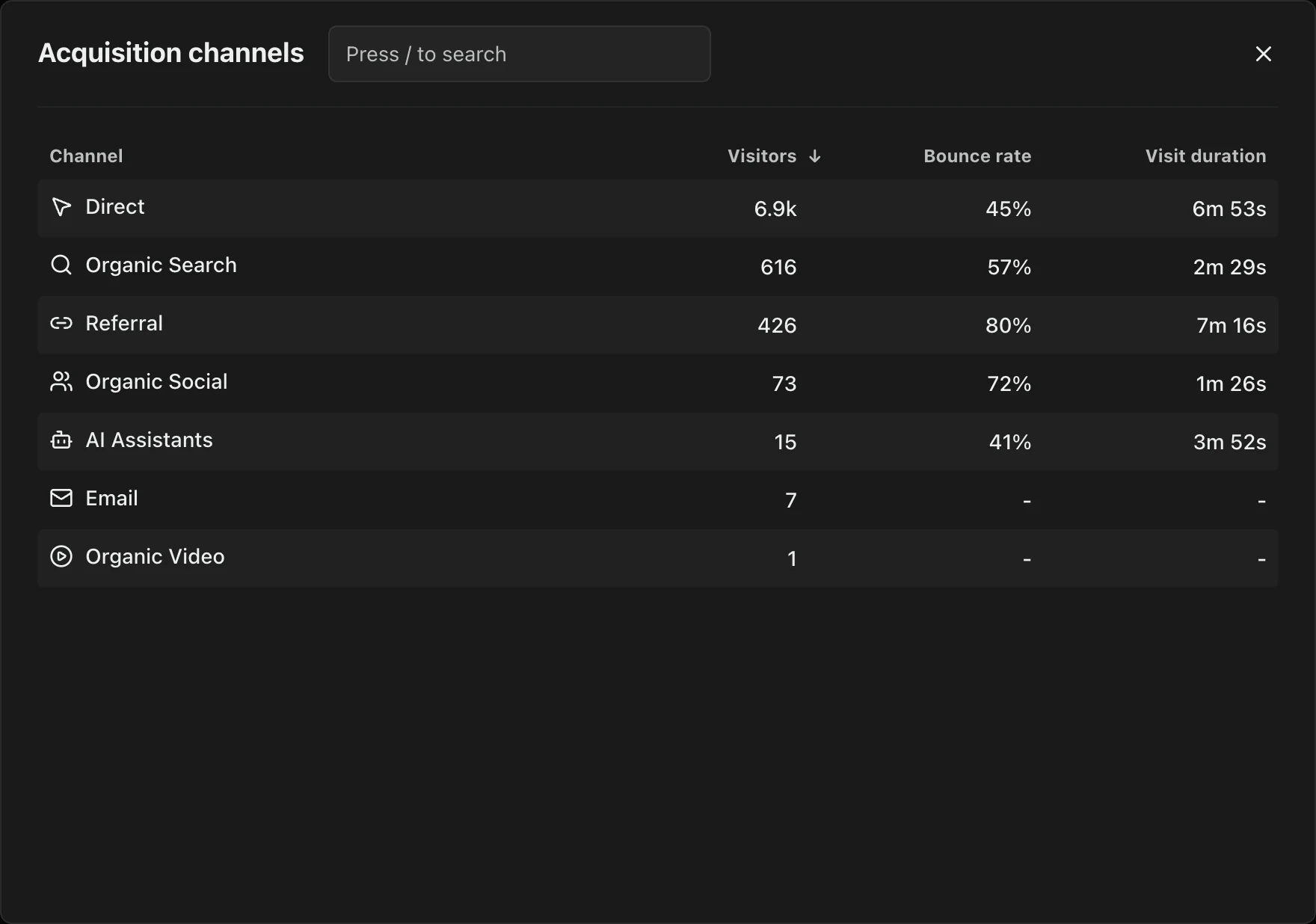
An acquisition view tells you where activity starts. A revenue view adds a different question: which recorded payments can actually be connected to it? Keep a visible unmatched category. A lower attribution rate can be the honest result of a more privacy-restricted implementation, not a reason to silently distribute the missing revenue.
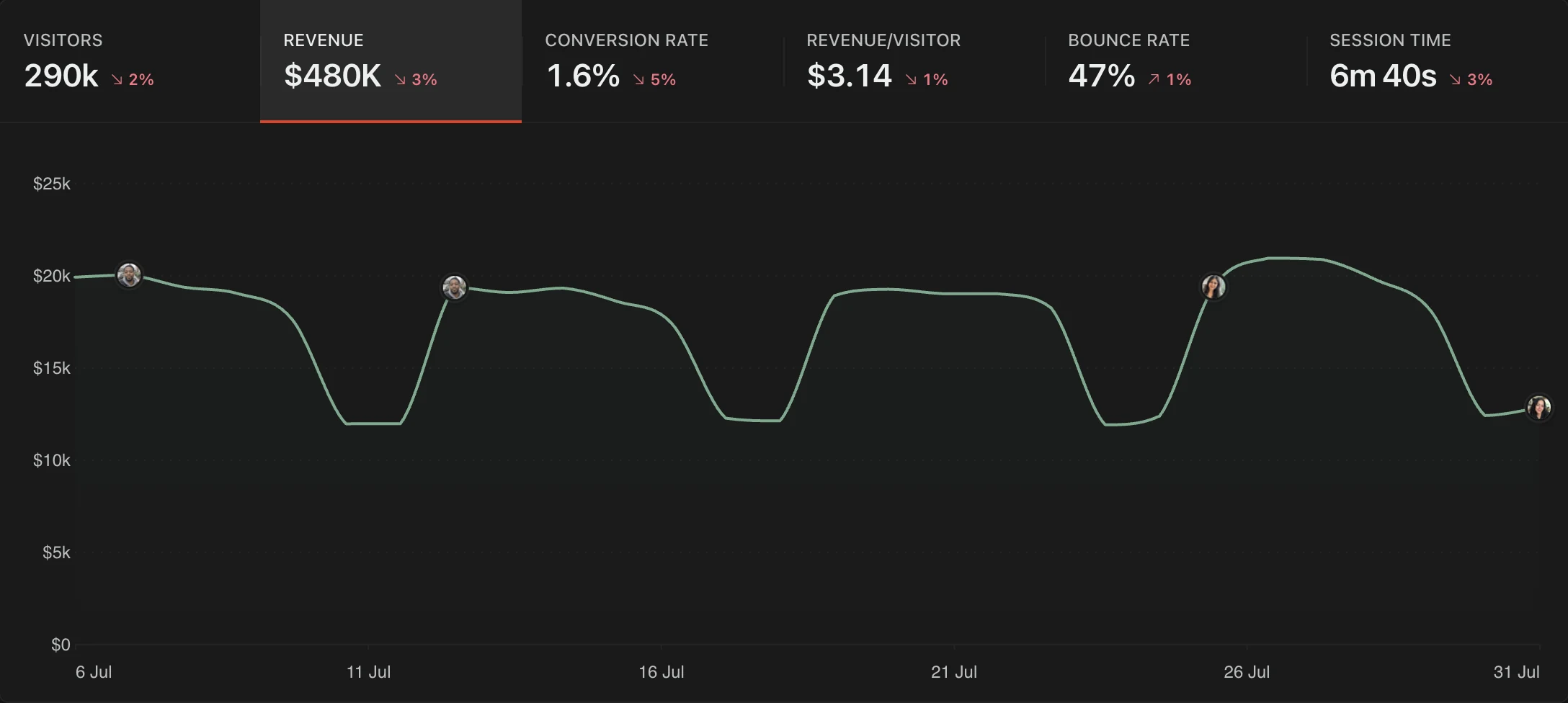
Premely’s anonymous conversion and funnel analysis uses bounded windows. It should not be treated as an unlimited, identified customer history. If that is your non-negotiable requirement, prioritise an appropriate identity model and verify it explicitly.
Before you switch, run a decision test
- Write three decisions. For example: which channel brings new customers, which signup stage loses them, and whether paid acquisition covers its costs.
- Build one representative path. Include the payment provider, domains and currencies you actually use.
- Reconcile a fixed period. Compare captured payments, attributed payments and unmatched payments separately.
- Check the operational cost. Include the required plan, billable events, implementation, exports and someone’s time to maintain them.
- Only then migrate. Preserve historical exports and documented event definitions. Do not expect different identity models to produce identical visitor totals.
You do not need a perfectly comprehensive platform. You need a reliable answer to a valuable question, with limitations your team understands. If DataFast already gives you that answer at a sensible operating cost, staying put is a valid outcome.