Analytics
Website Traffic Analysis: How to Turn Visits Into Better Decisions
Learn how to analyse website traffic, compare acquisition sources, interpret visitor and session metrics, and turn website analytics into a clear next step.

Premely team
On this page
More traffic is a number. Understanding what that traffic means is where the useful work begins.
A busy dashboard can make it feel as though you should be doing something. Visitors are up. A campaign has brought a new audience. One page has suddenly become popular. But none of those observations tells you what to change next.
This guide offers a calmer starting point: choose a question, follow the journey and make one deliberate decision. You do not need to inspect every report. You need enough context to understand the thing that matters today.
Start with a question, not a chart
Before opening your analytics, finish this sentence: “I want to understand whether…” A specific question gives the numbers a job. It also makes it easier to stop exploring when you have a useful answer.
- For a new article: are readers finding it, and do they go on to explore the product?
- For a campaign: are the people arriving from this source taking the action we intended?
- For a redesigned page: can visitors find their next step more easily?
Notice that none of these questions starts with “How do we get more pageviews?” More activity can be useful, but only in relation to the outcome you care about.
Read the whole journey
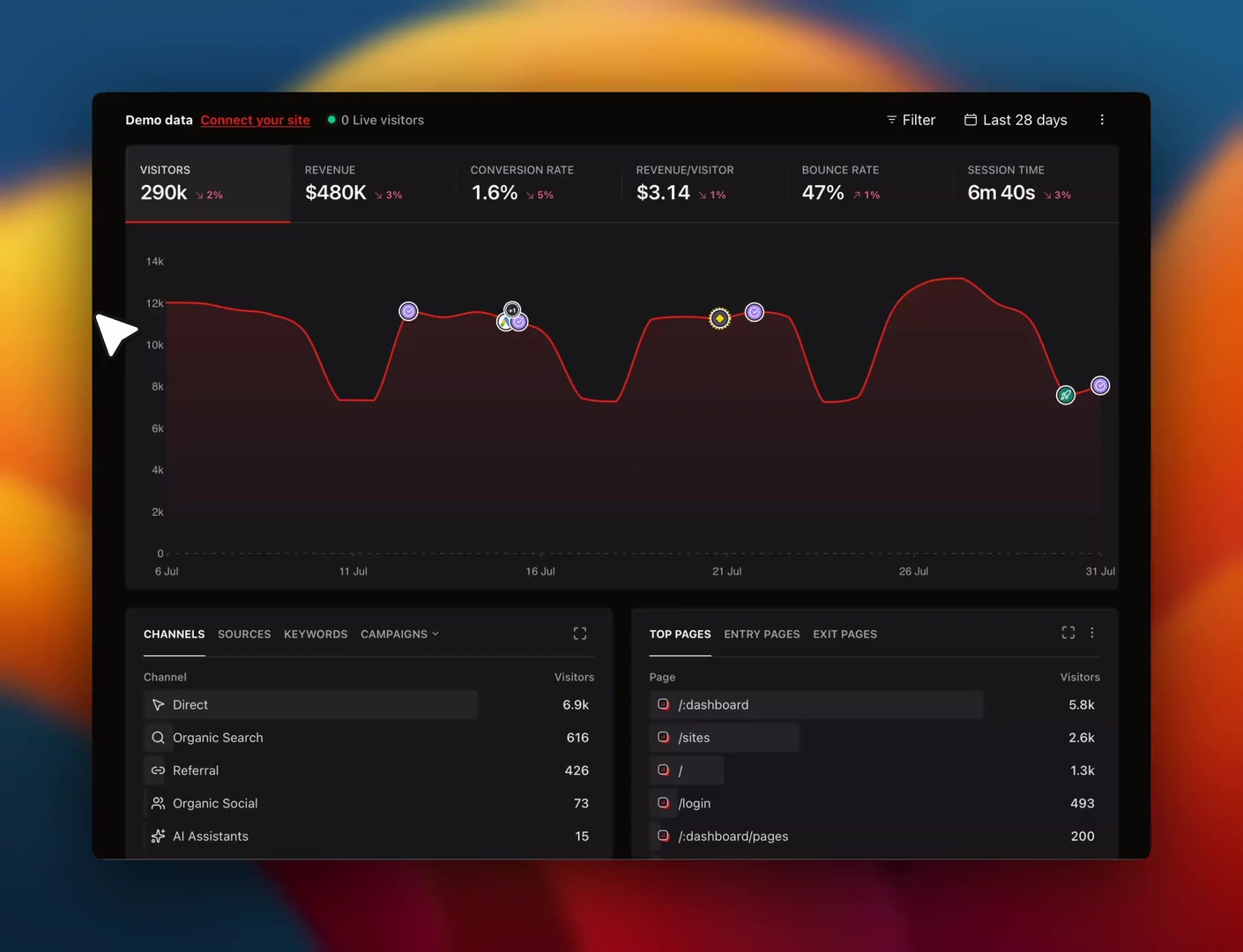
A headline total is a starting point, not the whole story. Look at how people arrive, what they encounter and whether they reach a meaningful outcome. These are three different questions, and they deserve three different views.
1. Where did the visit begin?
Start with sources and entry pages. A newsletter reader arriving at a specific guide has a different starting point from someone finding your homepage through search. Comparing them as though they were the same audience can hide what is actually happening.
2. What happened on the website?
Look at the pages people visited and the actions they took. A popular page might be helping visitors understand your product. It might also be a place where they get stuck. The next step in the journey helps you tell the difference.
3. Did the visit lead somewhere useful?
Choose an outcome that fits the page: a trial signup, a completed enquiry or another clearly defined action. Keep the definition consistent. A button click and a completed signup may be related, but they are not interchangeable.
Put the numbers in context
Visitors, visits and pageviews describe different parts of the same activity. Reading them together is more useful than choosing whichever one makes the week look best.
| Metric | What it describes | What to ask next |
|---|---|---|
| Visitors1 | Distinct measured visitor identifiers in the selected period. | Which sources brought this audience? |
| Visits | Sessions of activity. A returning visitor can have more than one. | Are people returning, and where do their visits begin? |
| Pageviews | Recorded page views, including repeated views within a visit. | Which pages help people move towards an outcome? |
Then make the comparison fair. Keep the site, date range and filters consistent. If one week included a launch and the other did not, that context belongs beside the numbers.
When the result is uncertain, say so. “We need another week of observations” can be a better decision than changing a page on the strength of a handful of visits.
Build a small weekly habit
You do not need a lengthy reporting ritual. A short, repeatable review makes it easier to spot changes without turning every movement into an urgent task.
- Set the context. Choose the same site and comparable time periods. Note anything unusual, such as a launch, outage or campaign.
- Find one meaningful change. Look for something connected to the question you wrote down, rather than the largest percentage on the screen.
- Follow it one level deeper. Use a source, page or device view to understand where the change is concentrated.
- Did the audience change?
- Did the experience change?
- Is the measurement still comparable?
- Write down the next step. Choose an action, an investigation or a decision to wait. Give it an owner and a review date.
The goal is not to explain every movement in a chart. It is to leave with a better next question.
A principle for your weekly review
Keep the notes somewhere your team already works. A few clear sentences are more valuable than a report that nobody reads.
Make one useful change
Suppose people are finding a guide, but few are exploring the product afterwards. One possible next step is to improve the link between the advice and the product, rather than adding more calls to action everywhere.
Keep a useful record
Write the idea down before changing the page. Include what you expect to learn and what would make you reconsider. This is an illustrative review note, not a claim about a real campaign.
Question: Do guide readers explore the product?
Observation: Readers reach the end of the article.
Hypothesis: The next step is not clear enough.
Change: Add one relevant product example.
Measure: Clicks on the article's demo link.
Review: After a comparable reporting period.
Before you call the change a success
- Confirm that the action is still measured in the same way.
- Compare like-for-like periods and check the audience mix.
- Keep clicks separate from completed outcomes.
- Record what you learned, including an inconclusive result.
Use a consistent name such as guide_demo_click in your review notes so the team knows exactly which action you mean. The name is less important than agreeing on its definition.
A useful analytics habit is a loop: ask, observe, decide, review. You do not need a perfect explanation of everything that happened. You need a clear reason for what you do next.
A few common questions
How often should I review my analytics?
A weekly review is a useful starting rhythm. Check more often when you are investigating a specific issue or monitoring a launch. Match the frequency to the decisions you need to make, not to how often the dashboard updates.
What if my website does not have much traffic?
Use longer, comparable periods and keep the conclusions modest. A few extra visits can create a large percentage change on a small base. Combine the numbers with direct feedback and observations of how people use the website.
Should every page have the same conversion goal?
No. An educational article and a signup page do different jobs. Define an appropriate next step for each, then connect those steps to the wider journey. You can revisit the three journey questions when deciding what to measure.
1. Visitor counts describe measured identifiers, not a verified count of individual people. Different devices and measurement conditions can affect that relationship. Return to the table ↑